After the deadly Novi Sad collapse exposed systemic corruption, Serbia’s largest protests in decades have refused to fade. Leaderless, decentralised and sustained despite aggressive repression, a generational revolt is testing the limits of Vučić's power.
Libya’s dinar crisis is not a dollar shortage. It is the product of fiscal expansion, subsidy distortions and a widening gap between official and parallel markets. This piece breaks down the data behind the arbitrage machine shaping Libya’s FX trajectory.
The country has been operating with separate and conflicting budgets for years, but a recent U.S. push is getting closer to achieving what many thought impossible.
After the deadly Novi Sad collapse exposed systemic corruption, Serbia’s largest protests in decades have refused to fade. Leaderless, decentralised and sustained despite aggressive repression, a generational revolt is testing the limits of Vučić's power.
Libya’s dinar crisis is not a dollar shortage. It is the product of fiscal expansion, subsidy distortions and a widening gap between official and parallel markets. This piece breaks down the data behind the arbitrage machine shaping Libya’s FX trajectory.
The country has been operating with separate and conflicting budgets for years, but a recent U.S. push is getting closer to achieving what many thought impossible.
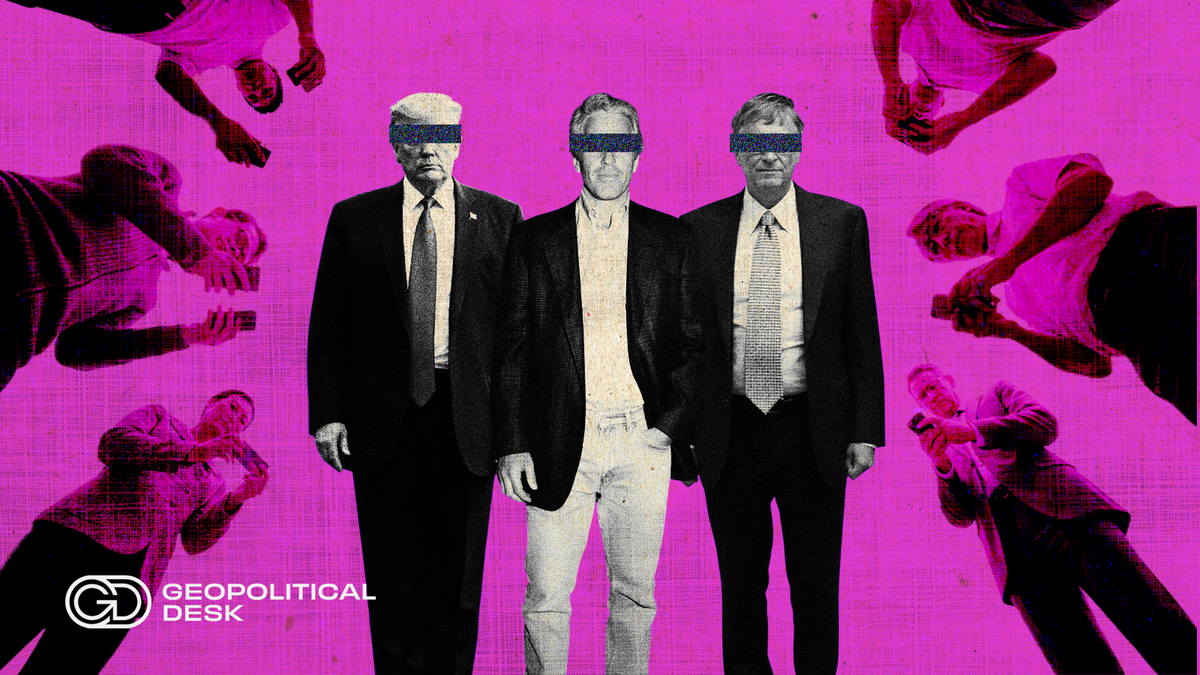
Despite multiple bombshell revelations in the Epstein files, there has been little coordinated reaction in the United States, leaving people uncertain with how to take action.
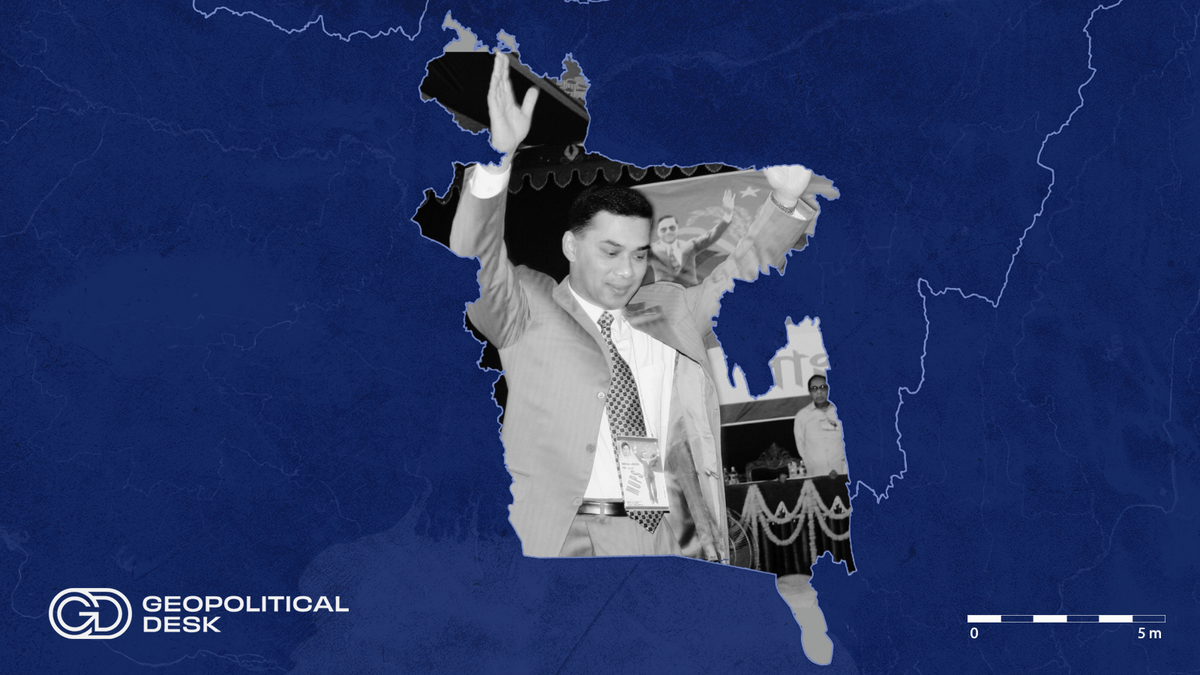
Bangladesh’s post-election landscape signals short-term stability, but structural risks persist. As Dhaka recalibrates after polls, investors and policymakers must weigh political consolidation, economic pressures and opposition dynamics shaping the country’s trajectory in 2026 and beyond.
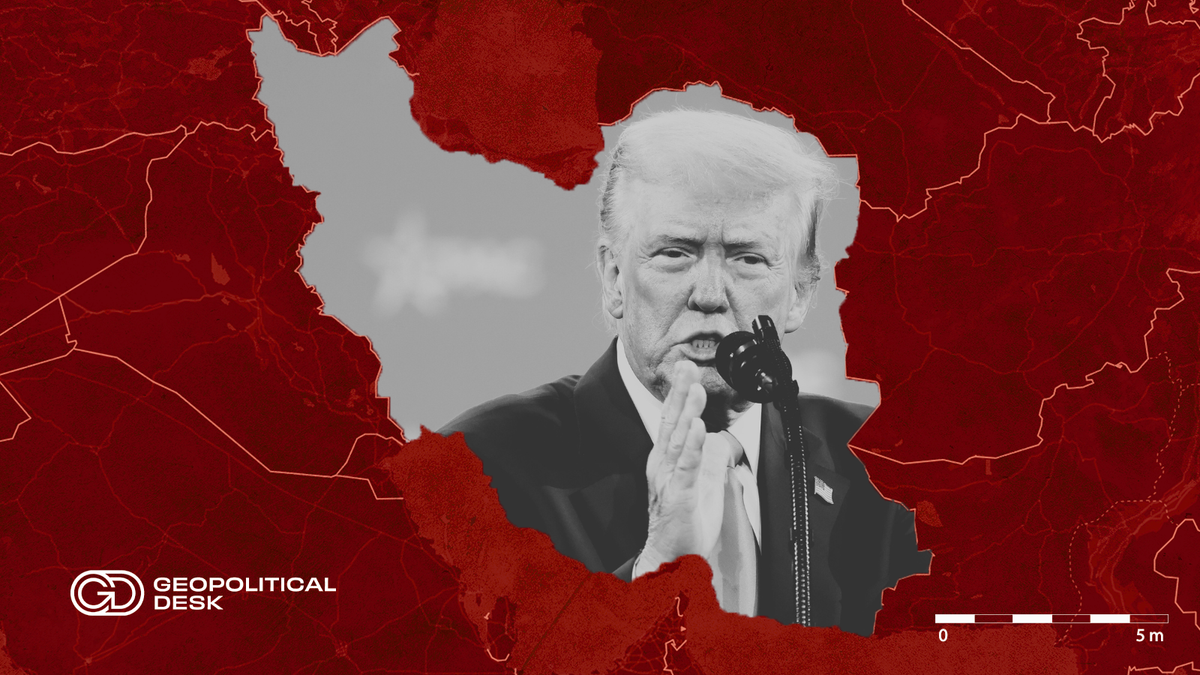
An American flotilla is nearing Iran as the country recovers from a violent state crackdown on mass protests. The U.S. task force’s goals remain unclear, driving tensions in southwest Asia.
Libya’s dinar crisis is not a dollar shortage. It is the product of fiscal expansion, subsidy distortions and a widening gap between official and parallel markets. This piece breaks down the data behind the arbitrage machine shaping Libya’s FX trajectory.
The country has been operating with separate and conflicting budgets for years, but a recent U.S. push is getting closer to achieving what many thought impossible.
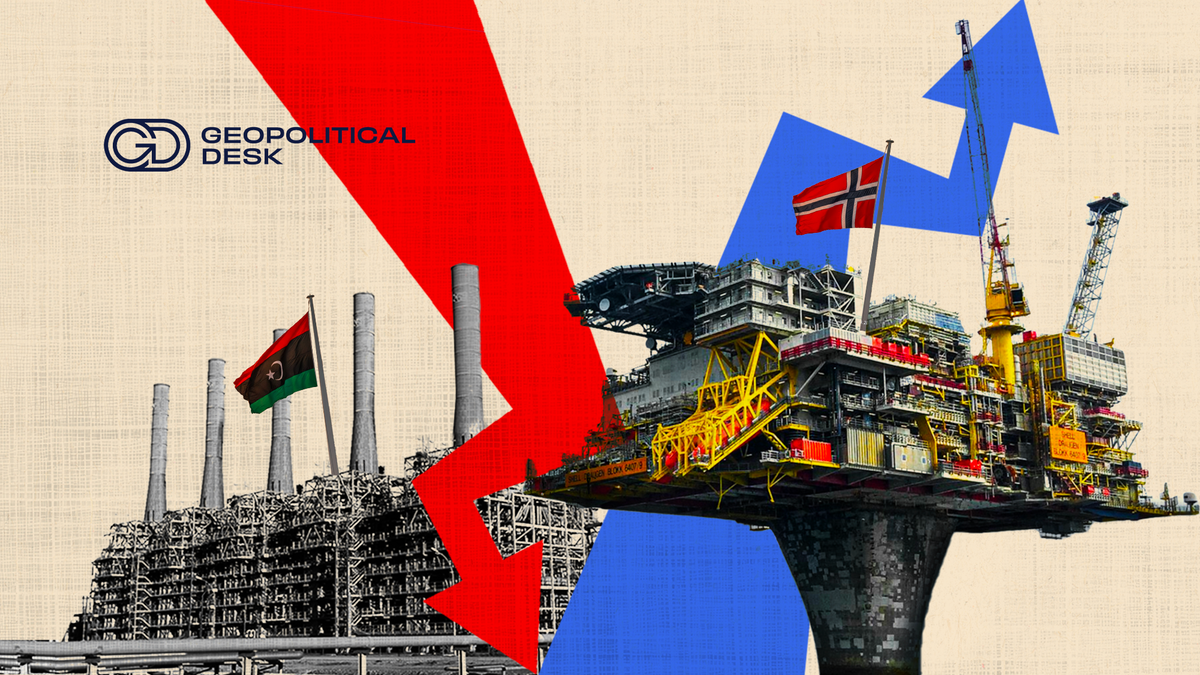
Libya’s latest bid round has revived debate about production, reform and investment risk. But in today’s oil market, the real constraint is no longer geology or output. It is whether Libya’s governance and operating model can convert barrels into durable economic value.
🔎 What we're monitoring this week: ▸ 🇺🇸 The political aftershock of the Epstein files ▸ 🇮🇷 Escalation risk as U.S. assets build near Iran ▸ 🇧🇩 Bangladesh’s post-uprising consolidation ▸ 🇱🇾 Libya’s offshore energy window
If the U.S. were to attack Iran in the coming days, it would start to resemble a familiar pattern.
In early January, as the world awaited the release of a new batch of Epstein files and Washington bristled, the United States carried out a major military operation in Venezuela, striking military targets around Caracas and capturing President Nicolás Maduro and his wife.
That operation instantly shifted the media spotlight away from domestic controversy over the release of the Epstein files and onto an unprecedented international intervention, changing the conversation from scandal back to state power and foreign policy.
Now, with significant U.S. military forces deployed near Iran and senior commanders publicly warning of potential strikes to compel Tehran to meet stringent demands, the question arises again: will a looming confrontation in West Asia eclipse one of the most politically volatile stories in recent memory?
This week, we unpack not only the Epstein fallout but also the wider geopolitical backdrop within which Washington’s focus may pivot — as it has before — to an event that recasts the narrative from domestic reckoning to foreign conflict.
Let’s get into it.
The fight over the Epstein narrative
What happened: The release of nearly three million documents related to Jeffrey Epstein has confirmed the breadth of his crimes and the extent of his network among the rich and powerful worldwide. The revelations have been deeply disturbing. Yet they have not produced the expected institutional reckoning.
Why it matters: The Epstein issue has operated as a political Rorschach test since 2019. For the right, it validated suspicions of elite corruption. For the left, it symbolised entrenched impunity among wealth and power. Now that many of these suspicions have been validated, the response has been surprisingly muted. This is not due to a single cause, but reflects systemic conditions: a polarised electorate, weakened institutions, media fragmentation and a president who has cultivated an aura of political invulnerability. Even as the files appear to have harmed Donald Trump politically and angered elements of his base, they have not triggered broad institutional mobilisation.
What this means: The brief detention of former Prince Andrew Mountbatten-Windsor this week marks only the third arrest in the Epstein saga. Despite a number of high-profile resignations around the world, there have been no meaningful consequences to date. It remains to be seen whether Prince Andrew will face any either. The absence of a reckoning reflects the broader moment of institutional paralysis that the U.S. (and the Western world more generally) is traversing. While the files have “stuck,” in contrast to previous scandals that Trump was able to deflect, the long-term political consequences remain uncertain. In the United States, Democrats may benefit electorally, but whether any administration would possess the institutional capacity or political will to pursue structural accountability remains unclear. The result is a country that is politically reactive, yet structurally inert.
Did Bangladesh’s elections restore stability or defer crisis?
What happened: Bangladesh’s February 2026 parliamentary elections delivered a decisive two-thirds majority to the Bangladesh Nationalist Party (BNP), restoring elected authority after the 2024 uprising that removed Sheikh Hasina. Early indicators suggest improved administrative coherence and reduced short-term political risk.
Why it matters: The electoral mandate is clear, but the macroeconomic backdrop is fragile. Growth slowed to an estimated 3.3 percent in FY2025, down from 5.2 percent the previous year. Inflation has moderated but the budget deficit sits near 4.3 percent of GDP. Externally, Dhaka faces a delicate balancing act as relations with India are strained over the extradition dispute involving Sheikh Hasina. Meanwhile, Bangladesh is navigating U.S.–China strategic competition, including new trade arrangements with Washington and defence-technology cooperation with China.
What this means: The post-Hasina era does not represent systemic instability. Nor does it represent a clean reset. It offers a narrow but real window for stabilisation and reform. Execution will determine trajectory. The BNP must convert mandate into credible banking oversight, fiscal discipline, and anti-corruption enforcement For investors, the landscape blends caution with selective opportunity. Competitive labour costs and geographic positioning offer upside. But governance credibility will determine whether projected acceleration toward 5–6 percent growth materialises.
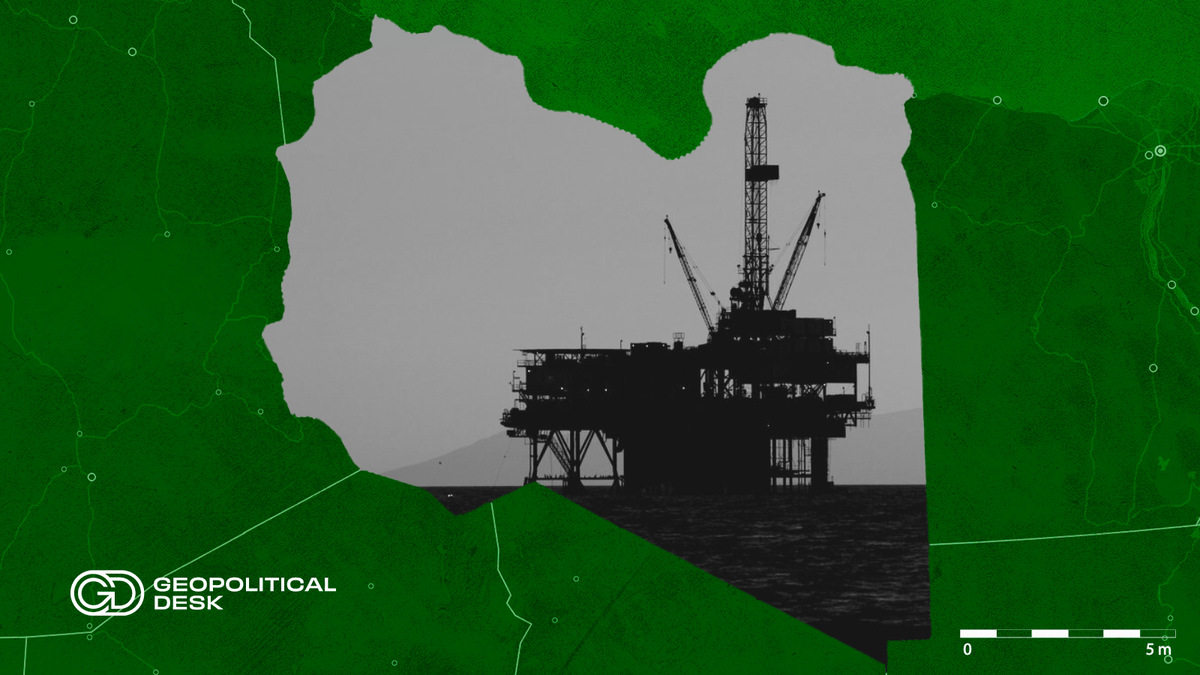
What happened: The Eastern Mediterranean maritime agreement has opened a potential new frontier for Libya’s offshore oil and gas prospects. Estimates for the broader region suggest up to 107 billion barrels of oil and 122 trillion cubic meters of gas, though only exploration will determine what lies within Libya’s claimed zone.
Why it matters: Seen optimistically, the agreement could pave the way for political coordination between western and eastern authorities and produce a unified energy framework. Economic transformation would follow, including reduced flaring, grid upgrades and sovereign wealth stabilisation. However, not all that glitters is gold. If we take a pessimistic view - which, let's face it, is probably the safer bet in Libya - this will exacerbate already existing tensions. Rival governments will issue overlapping offshore licenses and legal uncertainty will deter investment. Libya would remain dependent on ageing onshore fields. Competitors such as Egypt, Israel, and Cyprus would consolidate their positions.
What this means: Libya’s offshore future is not a question of potential alone. The difference between the optimistic and pessimistic scenarios rests on three factors: political unification; sustained foreign investment; and geological reality. The maritime agreement can either become a turning point or another unrealised initiative overshadowed by fragmentation. In that sense, the next five years are critical. As far as political unification is concerned, the prospect of a potential breakthrough on Libya’s unified budget brokered by the U.S. is a promising sign. For policymakers and investors alike, however, the key variable is not headline reserves. It is whether Libya’s political actors treat offshore development as a shared national opportunity or as a tool of factional leverage.
🔎 What we're monitoring this week: ▸ 🇬🇧 Keir Starmer’s political vulnerability and the Epstein-Mandelson saga ▸ 🇱🇾 Libya’s structural energy trap and why more oil may mean more problems ▸ 🇧🇩 Bangladesh’s landmark election and the scenarios ahead ▸ 🇹🇷🇮🇷 Turkey signals flexibility on U.S.–Iran nuclear talks ▸ 🇸🇾 Assassination plots against President Ahmed al-Shaara ▸ 🌎 How a Super Bowl performance can carry geopolitical symbolism far beyond sport
This was an unusual week. The Epstein saga has crossed the Atlantic and risks toppling a British prime minister; Bangladesh is going through its first post-Hasina election; Turkey has signalled an opening to Iran-U.S. nuclear talks; and in Las Vegas, a SuperBowl halftime show quietly reframed who gets to narrate American identity.
Individually, these stories look unrelated.
Taken together, they paint a picture of how political systems everywhere are being stress-tested by reputational risk, geopolitical shocks, structural economics, demographic change and strategic recalibration.
This week’s analysis looks at what happened and, more importantly, what it all means.
Let’s get into it.
Keir Starmer’s tightening political circle
What happened: Keir Starmer has entered one of the most politically delicate phases of his premiership. Pressure is mounting internally and externally, and renewed scrutiny around the Epstein files — particularly alleged links and historic proximity through figures such as Peter Mandelson — has amplified factional unease within Labour’s ecosystem.
Why it matters: The Epstein issue is not primarily about legal jeopardy. It is about perception, elite networks and reputational vulnerability at a moment when Labour’s mandate is on unsure footing. Starmer’s authority rests on competence and stability. Any narrative that suggests proximity to a nepharious cabal of global elite risks undermining that positioning, particularly as Reform and Conservative voices attempt to reframe Labour as indistinguishable from the old political establishment.
What this means: It is unclear whether Starmer will be able to whether this political storm. If ousted, he would be the third Prime Minister in the past seven years to be removed from office before the end of his mandate. This shows that British politics has become structurally volatile. Prime ministers now operate under permanent review. If economic performance stalls or factional pressure intensifies, what appears manageable today can quickly exacerbate.
Libya’s structural energy trap
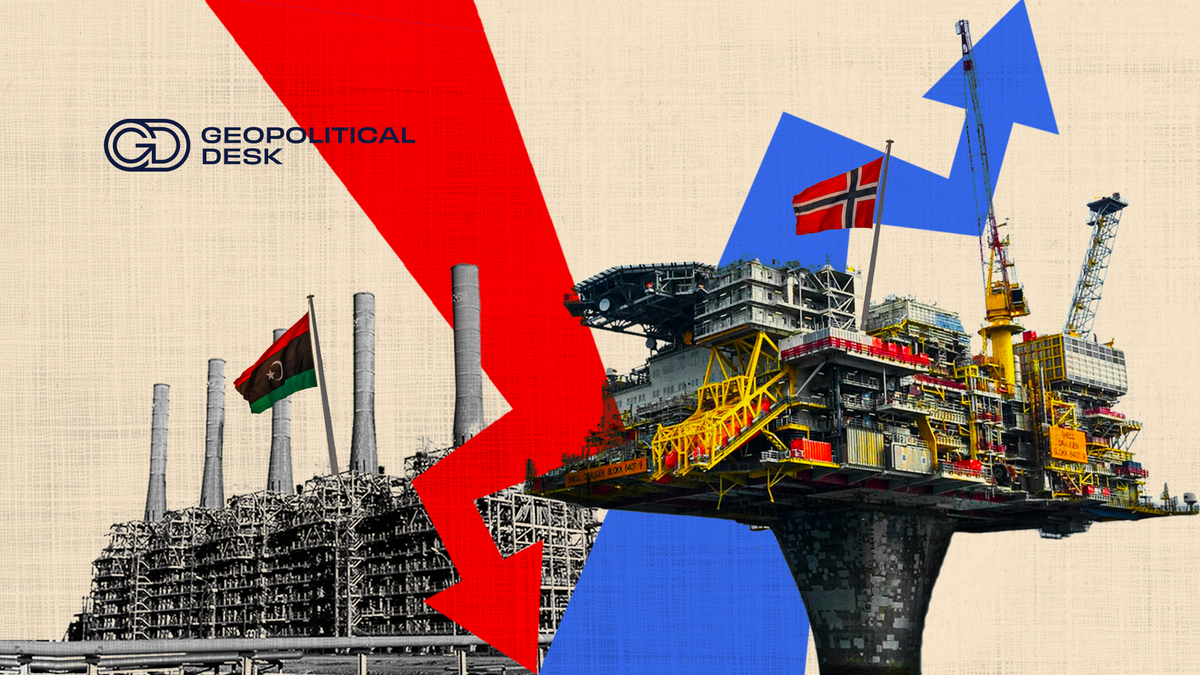
What happened: Libya’s latest bid round has revived debate about production, reform and investment risk. But in today’s oil market, the real constraint is no longer geology or output. It is whether Libya’s governance and operating model can convert barrels into durable economic value. Our latest report provides a comparative analysis between Libya and Norway, and puts forward some potential solutions to fix Libya’s structural energy trap.
Why it matters: Libya’s problem is not simply production volatility. It is structural design. Oil revenue flows through institutions that lack unified political authority. Every additional barrel strengthens competing patronage networks rather than reinforcing national value. In this context, production increases do not resolve fragmentation; they intensify the incentives that sustain it.
What this means: Absent reform in revenue distribution mechanisms and fiscal governance, Libya’s energy growth will continue to entrench political fragmentation. More oil, without institutional redesign, means more problems.
Subscribers can download the full report for free at the end of the article. We also have the complete dataset and financial modelling workbook available — if you’re interested, reach out directly.
Bangladesh votes in a landmark election
What happened: Bangladesh held a landmark election following months of political tension and mass mobilisation. Voters turned out in large numbers amid heightened security and a deeply polarised political environment. Our previous report assessed the risks and scenarios of this election in detail.
Why it matters: This election represents the first real stress test of Bangladesh’s post-crisis transition. The vote was not simply about party competition. It was about institutional legitimacy after months of unrest. Whether the outcome is broadly accepted will shape investment risk, governance continuity and regional political alignment.
What this means: The election is both feasible and fragile. The base case is an orderly transition, supported by interim safeguards and public appetite for reform. However, risks still remain and whether the country's opportunity can be fully unlocked will depend on what comes next.
▸ 🇱🇾The assassination of Saif al-Islam Gaddafi and what it reveals about Libya’s enduring instability and unresolved conflict. ▸ 🇱🇾/🇵🇰Khalifa Haftar’s outreach to Islamabad and whether Libya’s eastern camp is testing a new strategic axis beyond its traditional backers. ▸ 🇬🇧/🇱🇾 The quiet thaw in UK–LNA relations and what it signals about Western recalibration toward power realities on the ground. ▸ 🇺🇸 Trump’s foreign policy logic, why fear not morality sets its limits, and how that worldview shapes Washington’s engagement with fragile states.
If this was forwarded to you, you can sign up for our free newsletter here. We publish once a week on Sundays, with additional in-depth analysis throughout the month.
It is a stark signal that 15 years after the Gaddafi regime was toppled, the country remains structurally insecure, deeply penetrated by external interests and governed by political arrangements that put violence before dialogue.
🇱🇾 Saif al-Islam Gaddafi’s killing and what it reveals about Libya today
What happened: The killing of Saif al-Islam Gaddafi, the former heir apparent of Libya’s late leader Muammar Gaddafi, marks a highly symbolic and potentially destabilising moment for the country. His assassination has sent a shockwave through Libyan politics that is likely to reverberate across the country’s fragile social fabric and already strained institutional order.
If this was forwarded to you, you can sign up for our free newsletter here. We publish once a week on Sundays, with additional in-depth analysis throughout the month.
This week’s coverage circles a familiar but increasingly unstable reality in West Asia: escalation without strategy and policies that are being vindicated for the wrong reasons.
The common thread in all these developments is not necessarily strategic calls but potential miscalculations. Power is being exercised, but without a clear sense of the second and third-order effects.
Below, I break down what shifted this week, why it matters and where the risks are quietly stacking up.
Now let's get into it.
The many paths to confrontation between the US and Iran
What happened: US–Iran tensions are not accelerating in a straight line but branching into multiple, overlapping pressure tracks.
Washington continues to apply sanctions, rhetorical deterrence and selective military signalling, without committing to either escalation or de-escalation.
Tehran, meanwhile, is responding asymmetrically; avoiding outright confrontation while expanding leverage through proxies, regional positioning and calibrated nuclear ambiguity.
Why it matters: As we explored in this week's article, there is no single “path” to conflict. There are several, and they are increasingly disconnected from any clear political objective.
This ambiguity is often mistaken for strategy. It isn’t. The absence of a defined U.S. endgame has created space for misreading on all sides.
Iran interprets Washington’s posture as risk-averse but unpredictable. Regional actors hedge accordingly. Israel plans for unilateral action. Gulf states quietly prepare for containment, not resolution.
The result is a crowded escalation ladder where no actor controls the pace.
What this means: The danger is not a deliberate war but an accidental one, triggered by an incident that no party originally intended to escalate. In this environment, deterrence is less stable, not more. Washington’s current approach buys time, but it also multiplies the number of ways things can go wrong.
Without a common foreign policy goal, the Gulf states have engaged in trivial rivalries that have carried serious security and human costs for the region. It's time to rethink that approach.
Libya’s dinar crisis is not a dollar shortage. It is the product of fiscal expansion, subsidy distortions and a widening gap between official and parallel markets. This piece breaks down the data behind the arbitrage machine shaping Libya’s FX trajectory.
With the possibility that Dabaiba may need treatment abroad, Libya's Government of National Unity could be forced to run on autopilot at a critical time.
Growing geopolitical competition between Egypt and the United Arab Emirates is taking shape in the Sahel, with the LNA poised to benefit due to its increasing presence in the region.
Despite multiple bombshell revelations in the Epstein files, there has been little coordinated reaction in the United States, leaving people uncertain with how to take action.
An American flotilla is nearing Iran as the country recovers from a violent state crackdown on mass protests. The U.S. task force’s goals remain unclear, driving tensions in southwest Asia.
Widely believed to be an ineffective form of diplomatic pressure, the long-standing sanctions regimes of the past two decades have begun to show results.
The country has been operating with separate and conflicting budgets for years, but a recent U.S. push is getting closer to achieving what many thought impossible.
Despite multiple bombshell revelations in the Epstein files, there has been little coordinated reaction in the United States, leaving people uncertain with how to take action.
An American flotilla is nearing Iran as the country recovers from a violent state crackdown on mass protests. The U.S. task force’s goals remain unclear, driving tensions in southwest Asia.
Libya’s dinar crisis is not a dollar shortage. It is the product of fiscal expansion, subsidy distortions and a widening gap between official and parallel markets. This piece breaks down the data behind the arbitrage machine shaping Libya’s FX trajectory.
Widely believed to be an ineffective form of diplomatic pressure, the long-standing sanctions regimes of the past two decades have begun to show results.
After the deadly Novi Sad collapse exposed systemic corruption, Serbia’s largest protests in decades have refused to fade. Leaderless, decentralised and sustained despite aggressive repression, a generational revolt is testing the limits of Vučić's power.
The country has been operating with separate and conflicting budgets for years, but a recent U.S. push is getting closer to achieving what many thought impossible.
Despite multiple bombshell revelations in the Epstein files, there has been little coordinated reaction in the United States, leaving people uncertain with how to take action.
Bangladesh’s post-election landscape signals short-term stability, but structural risks persist. As Dhaka recalibrates after polls, investors and policymakers must weigh political consolidation, economic pressures and opposition dynamics shaping the country’s trajectory in 2026 and beyond.
Oliver is a co-founder and editor of The Geopolitical Desk. He writes our flagship weekly newsletter, drawing on years of fieldwork in the Middle East and North Africa. His approach blends local insight with clear, evidence-driven reporting.